
How to Plan the Best RMC Plant Setup for Mass Concrete Pours in India
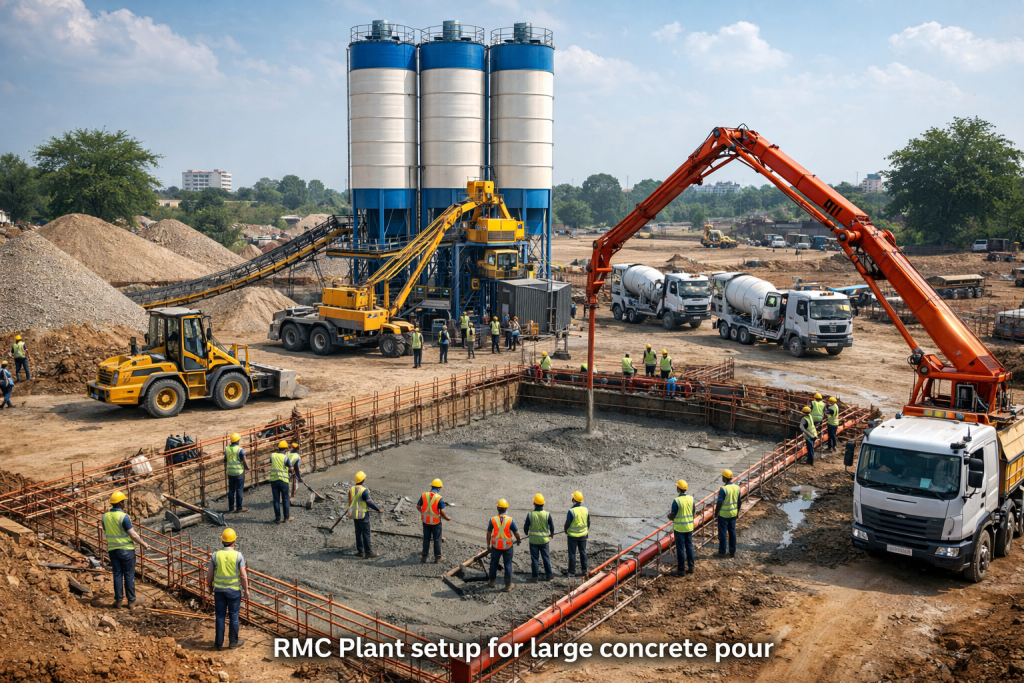
Mass concrete is not only about producing a large quantity of concrete. It is about maintaining continuous supply, controlling quality, avoiding cold joints, reducing downtime, managing heat generation, and matching plant output with actual site demand. That is why an RMC plant setup for mass concrete should always be planned scientifically and not just selected by nameplate capacity.
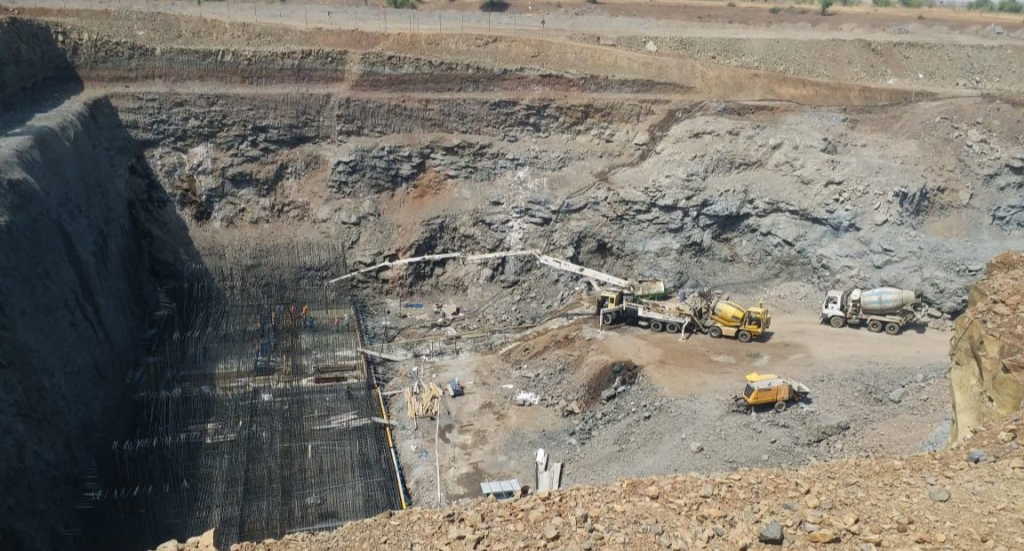
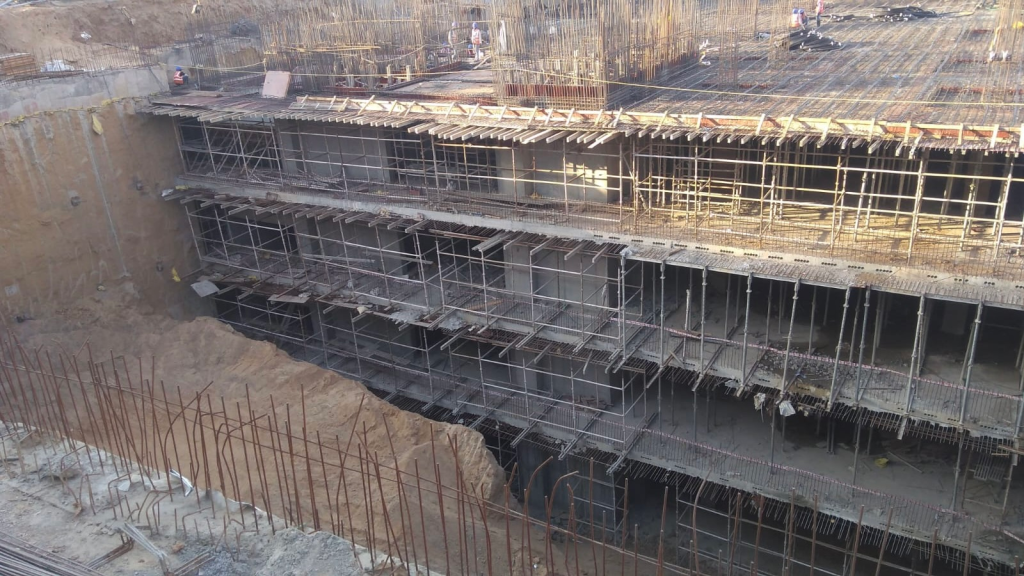
For Indian projects such as large rafts, check dams, diaphragm walls, canals, industrial flooring, pavement quality concrete, roads, ports, bridges, and infrastructure foundations, an on-site RMC plant often gives better control than depending fully on outside vendors. It improves consistency, reduces lead time, gives better flexibility in mix adjustment, and can reduce the number of transit mixers required.
In simple terms, if your project has a time-bound pour, repetitive concreting, remote location, heavy daily target, or difficult traffic movement, an on-site plant is usually the smarter option.
Talk to Parishi Experts; Mail us at :- info@parishirental.com
150+ RMC plants working across India
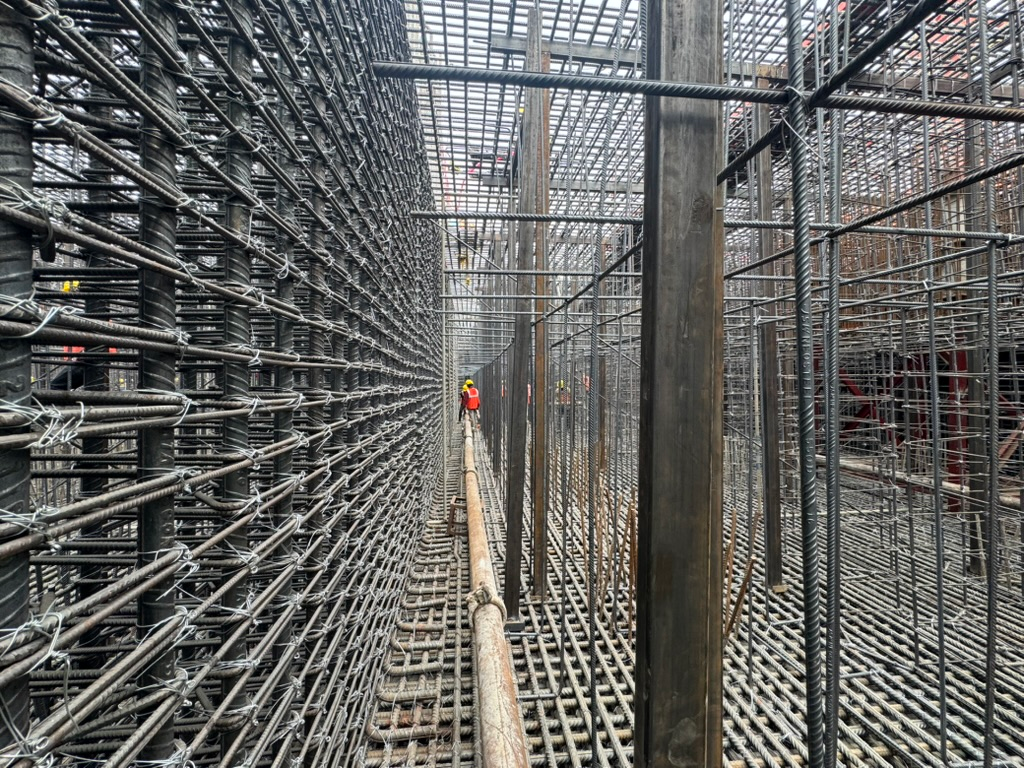
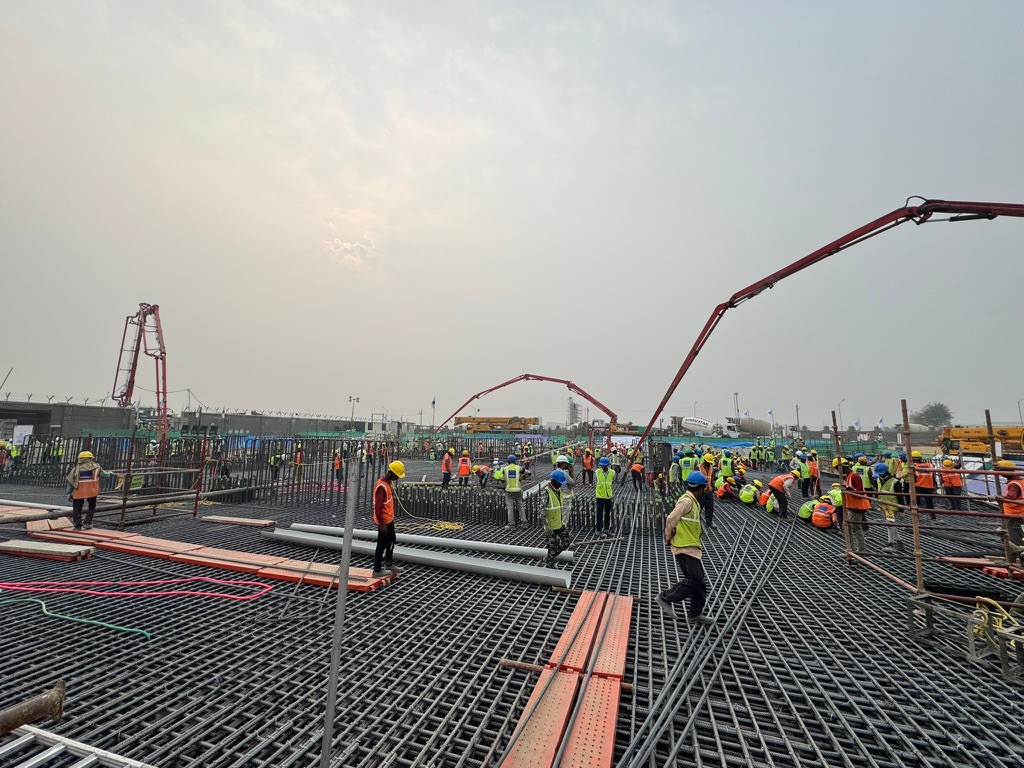
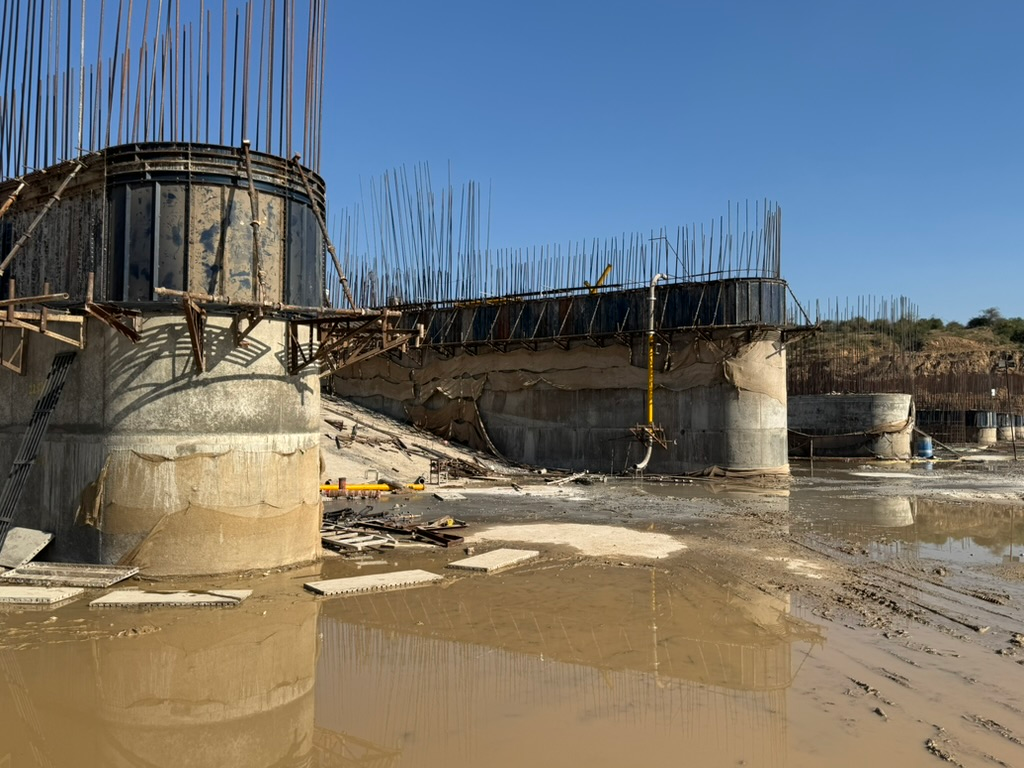
This guide will help you understand:
Which plant size is suitable for 1,000 CMT to 25,000+ CMT concrete work
When to use direct pumping and when to use transit mixers
What site preparation is needed before installing a plant
How silos, DG, and mix flexibility affect output
What is theoretically possible in mass concreting and what is practically difficult
How an on-site setup can reduce cost, save time, and improve project control
An on-site RMC plant is one of the most practical solutions for mass concrete because it solves the biggest problem in concreting: irregular supply.
When concrete comes from an outside RMC vendor, the project usually faces one or more of these issues:
the vendor is serving multiple clients
dispatch depends on traffic and route conditions
site waiting time increases
slump may reduce during long lead
the client needs more transit mixers
urgent mix changes become difficult
project control remains with the vendor, not the site team
With an on-site plant, the project gets several advantages.
continuous concrete flow
better pouring control
reduced dependence on outside suppliers
lower transport-related delay
more accurate planning for daily target
faster response to weather changes
lower transit mixer requirement in many cases
better coordination between plant, pump, and placement team
This is especially useful in projects where one delay can affect the full concreting cycle, such as raft foundations, trimix floors, pavement work, and canal structures.
this is the most important question.
The correct plant is not selected only by brochure capacity. It should be selected by:
total project quantity
daily target
pouring window
number of working shifts
pumping distance
number of casting fronts
concrete grade and workability requirement
site access and material feeding method
Below is a practical guide based on real site working conditions.
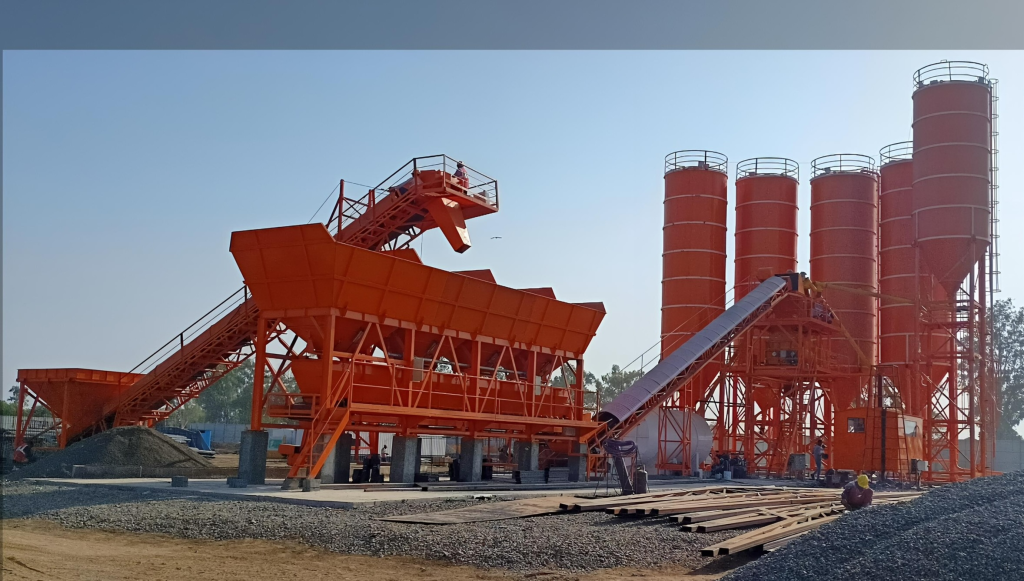
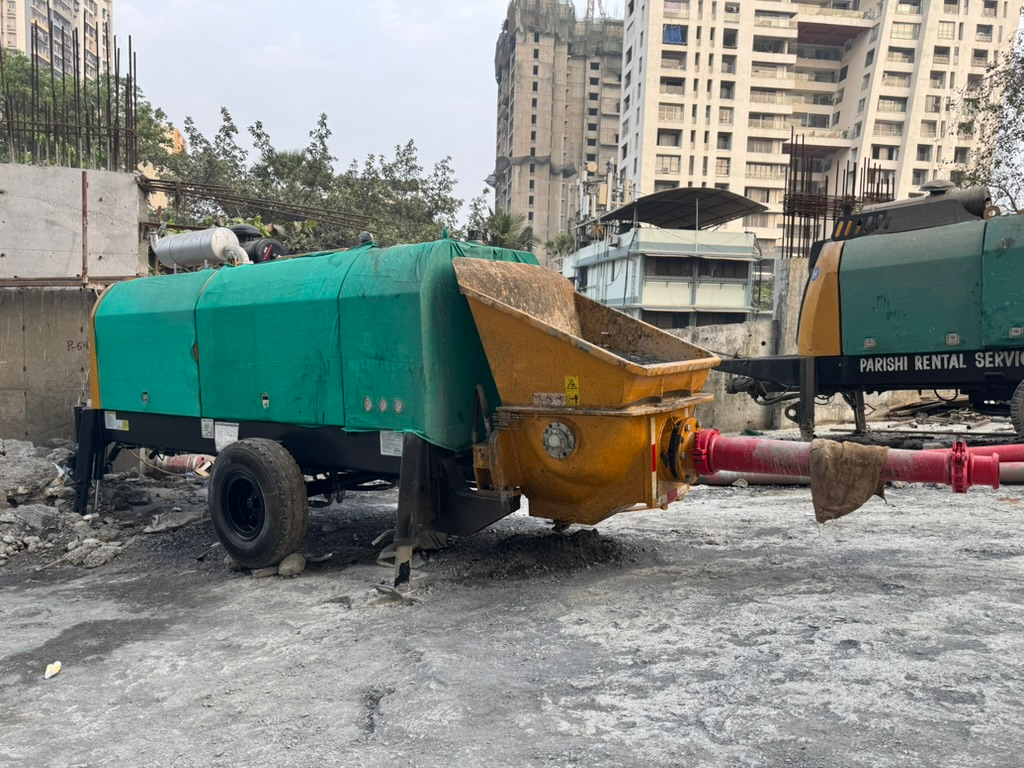
Practical output: around 12 m³/hour
This setup is useful for:
small check dams
compact raft pours
retaining walls
rural or remote sites
short-lead direct pumping
low-to-medium daily targets
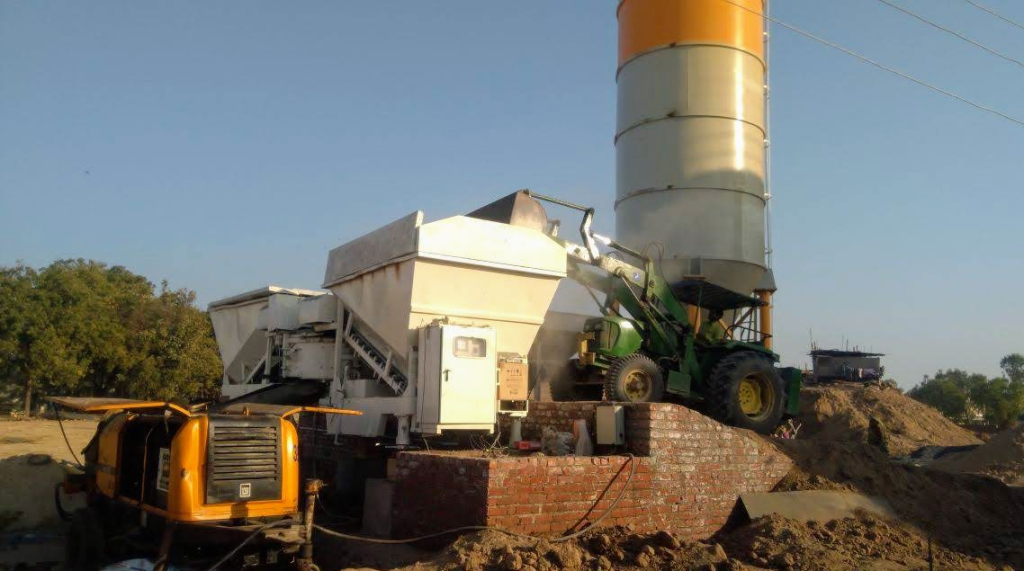
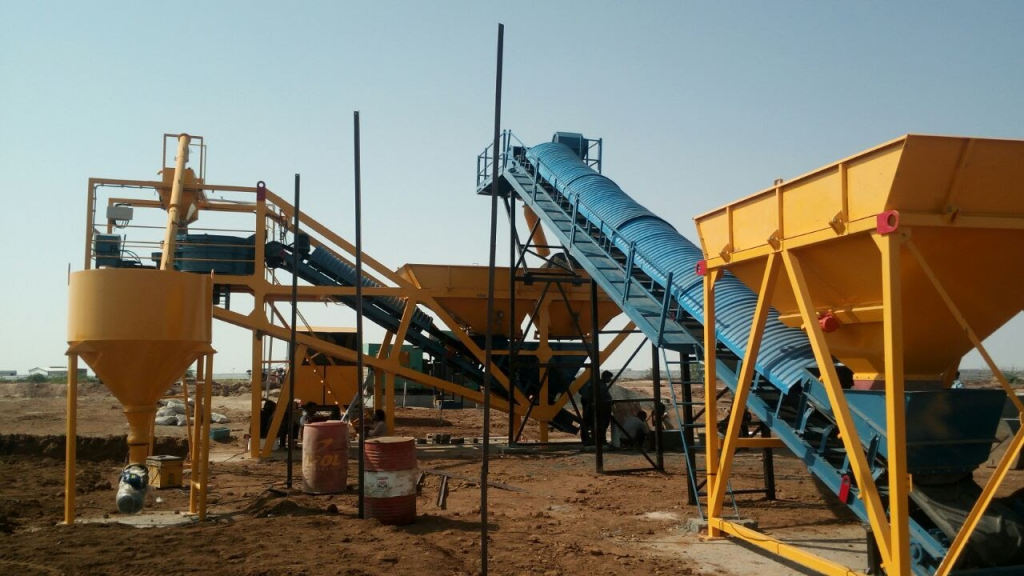
An 18 plant is compact and easier to place on site. It does not need a large civil arrangement compared to bigger plants. In many cases, a loader can directly feed the hopper, so a full ramp may not be required. Cement can be charged through hopper by labour through bag cutting when bulk handling is not feasible.
When the total quantity is around 1,000 to 4,000 CMT and the completion timeline is not extremely aggressive, this plant can be practical and economical.
Although the plant is small, it can still support pumping efficiently if the line route is properly designed and the placement point is within a workable distance.
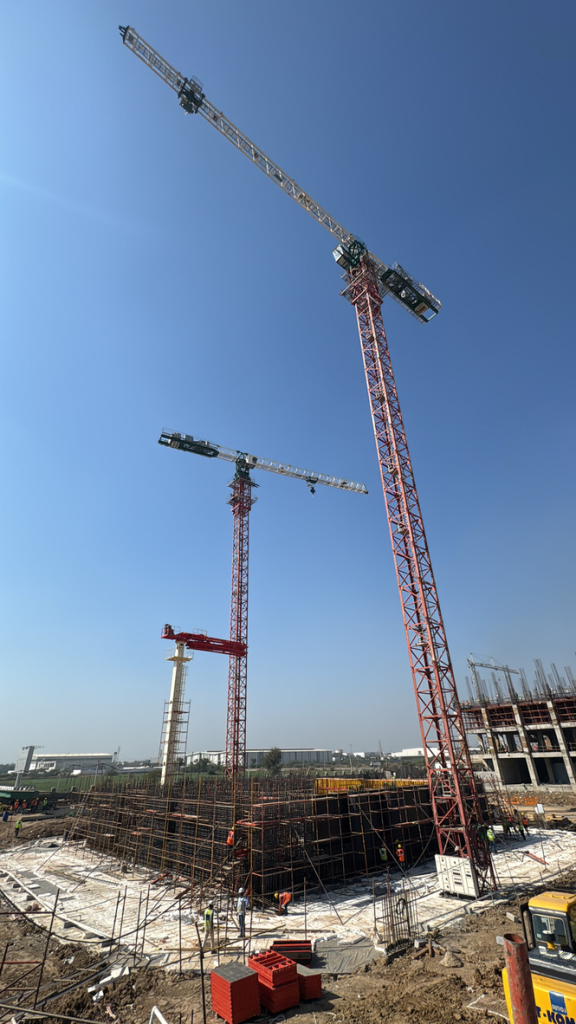
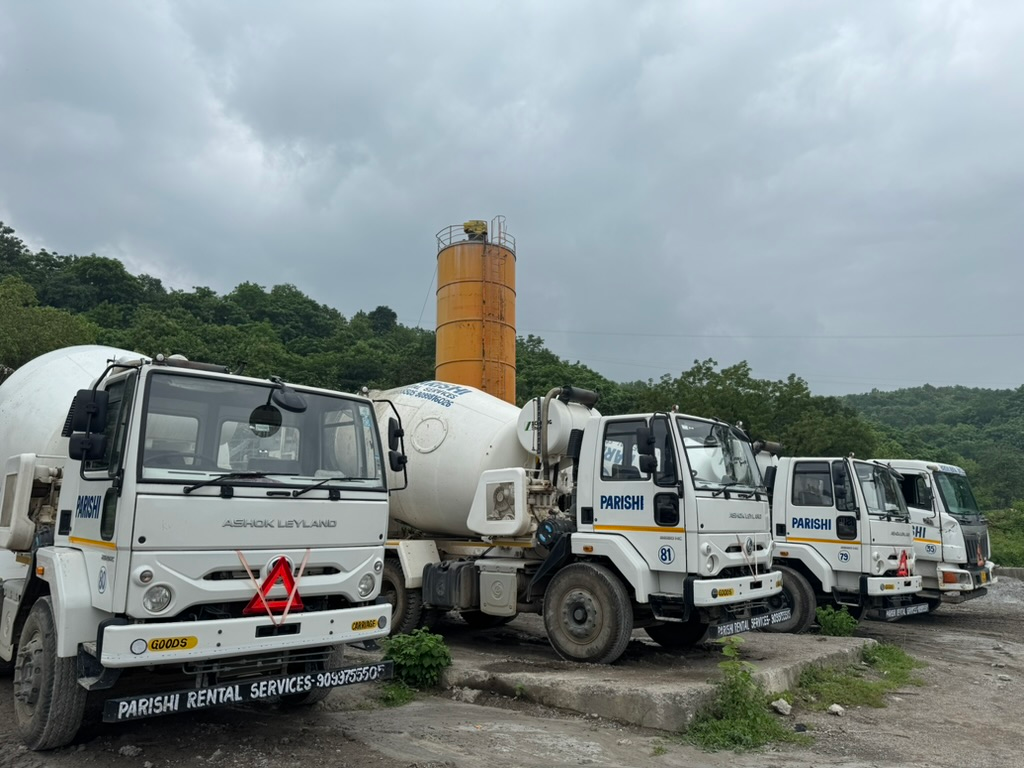
Practical output: around 25 m³/hour
A 30 plant is usually selected for:
canal work
medium raft pours
infrastructure foundations
industrial projects
repetitive concreting with higher daily targets
This plant size offers a very good balance between:
output
footprint
material handling
pumping compatibility
project flexibility
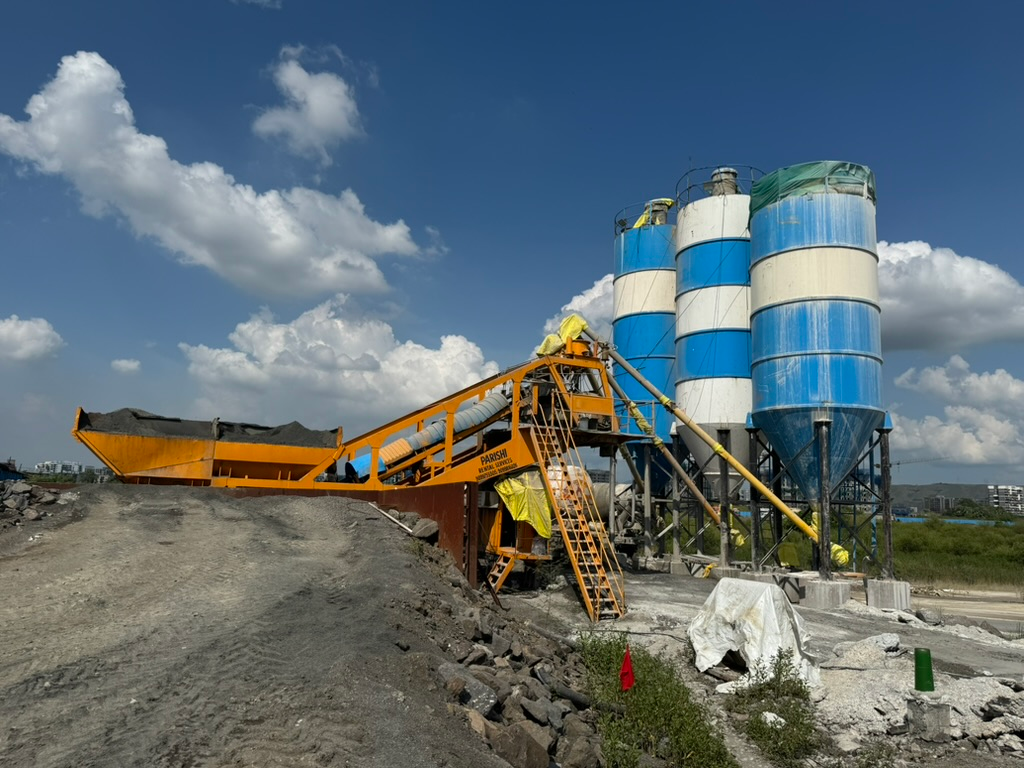
It can work in:
direct pumping model
transit mixer model
hybrid model
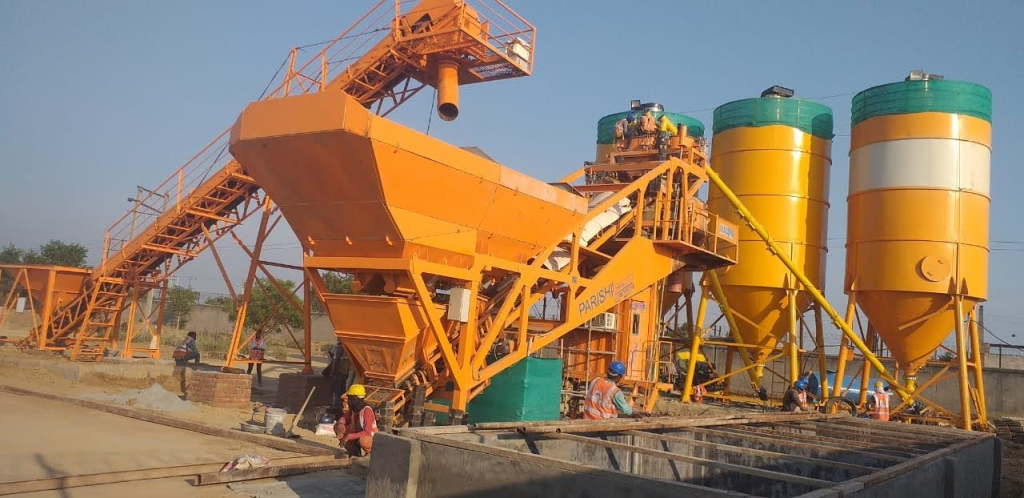
A 30 m³/hour plant with 3 silos can be a strong solution for a 12,000 CMT canal project planned over 2 months, provided the material planning, shifts, and equipment support are aligned.
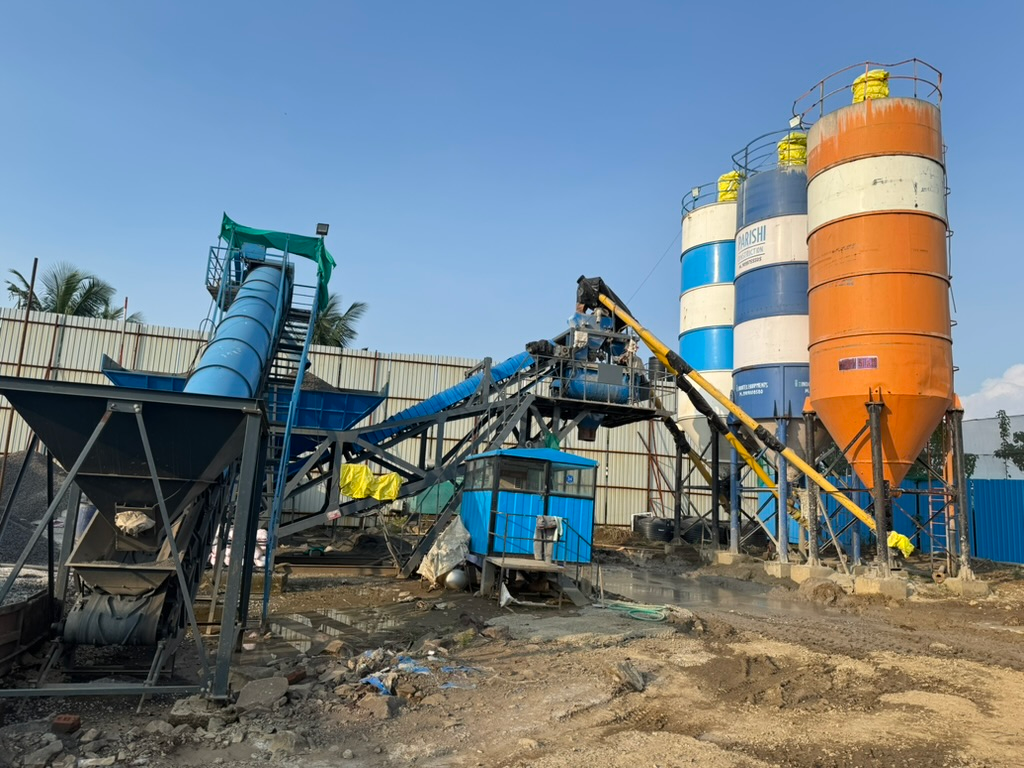
Practical output: around 38 m³/hour
This is one of the most practical capacities for:
trimix
industrial flooring
large raft pours
factory foundations
heavy daily target concrete works
A 45 plant can supply enough output for serious project demand while still being easier to deploy than very high-capacity setups. It is suitable where:
daily target is high
multiple TMs are used
pump output must remain consistent
a project has limited completion time
A 45 m³ plant with hopper and 6 transit mixers can be ideal for completing 8,000 CMT trimix in 45 days, depending on site access and shift operation.
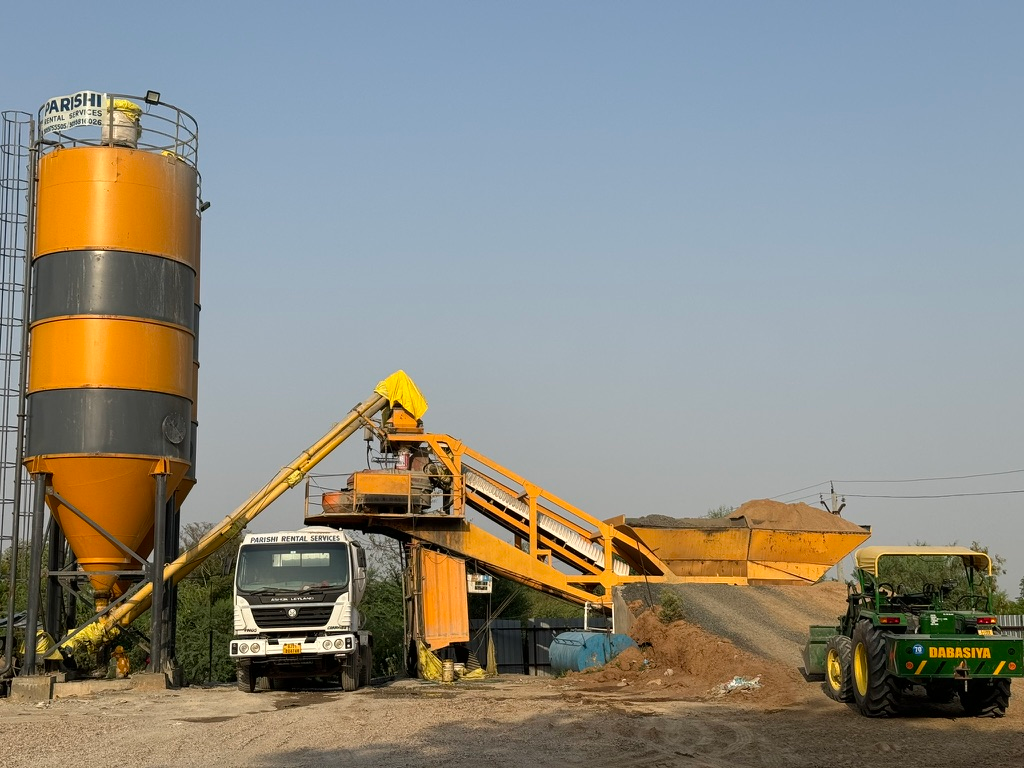
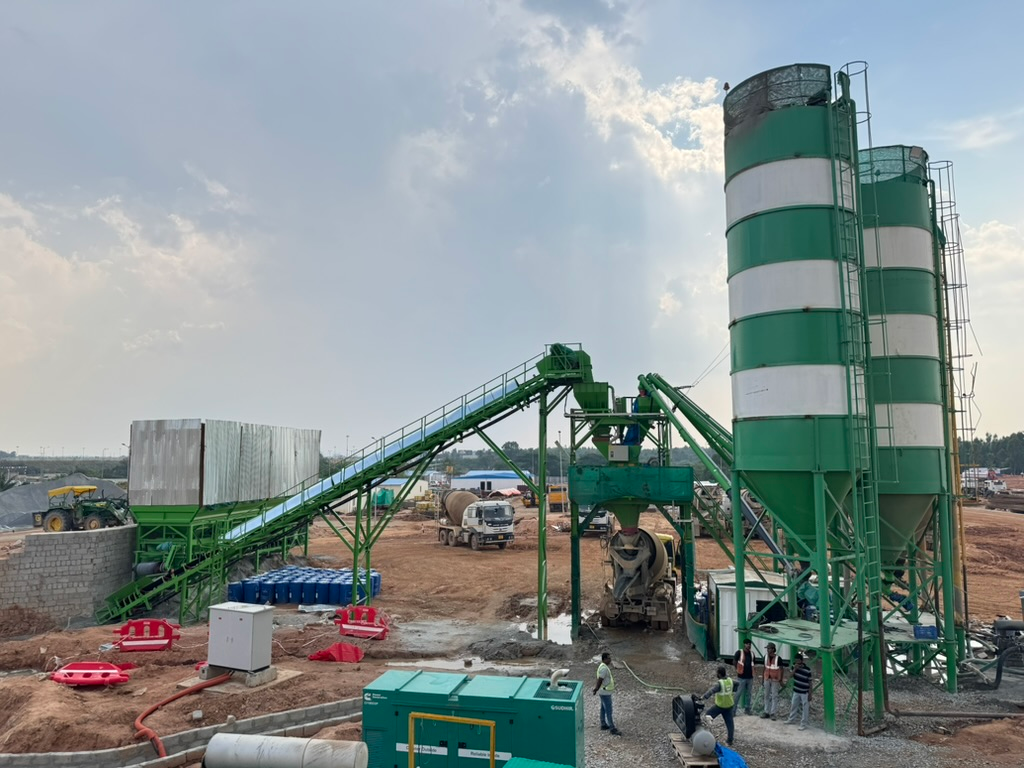
A 60 plant is suitable for:
road packages
major infrastructure jobs
airport work
large industrial zones
fast-track site concreting
For a 60 plant, one usually needs to place one transit mixer below the plant because the plant mixer capacity and discharge arrangement are different from smaller direct pumping models. So while direct-style site supply is still possible in planning, practically the output management is usually better when a TM is involved.
When the project needs higher daily output and the target schedule is tight, a 60 plant or higher becomes a better option than trying to force a small plant to overperform.
Total Quantity | Suggested Plant Setup | Practical Output | Best Suitable For | Main Benefit |
|---|---|---|---|---|
1,000–3,000 CMT | 18 plant + Silo/Hopper + pump | 12 m³/hr | check dam, compact raft | simple and economical |
3,000–6,000 CMT | 20 plant + Silo/Hopper + pump / TM hybrid | 15 m³/hr | D-wall support, small infrastructure | stable daily output |
6,000–12,000 CMT | 30 plant + Silo/Hopper + pump | 25 m³/hr | canal, foundation, medium projects | balanced production |
8,000–15,000 CMT | 45 plant + Silo/Hopper + TMs | 38 m³/hr | trimix, industrial works | faster completion |
15,000–25,000+ CMT | 60 plant / multiple plants | project-based | roads, airport, large packages | high-volume planning |
This model is best where:
plant is close to pouring location
line route is manageable
continuous flow is required
TM dependency is reduced
In a direct pumping model, concrete moves from the site plant to the pump system with minimum intermediate handling. This can reduce:
TM cost
TM diesel
manpower coordination
waiting time
return cycle dependency
It can also improve flow continuity.
This is better where:
dumping through TM is necessary
site layout is spread out
the final placement point keeps shifting
plant cannot sit near the pour zone
multiple fronts must be served
Many sites actually perform best with a hybrid method. One area may use direct pumping, while another may need TM transport.
Parishi Rental Services Direct Concrete Cost and Supply Model
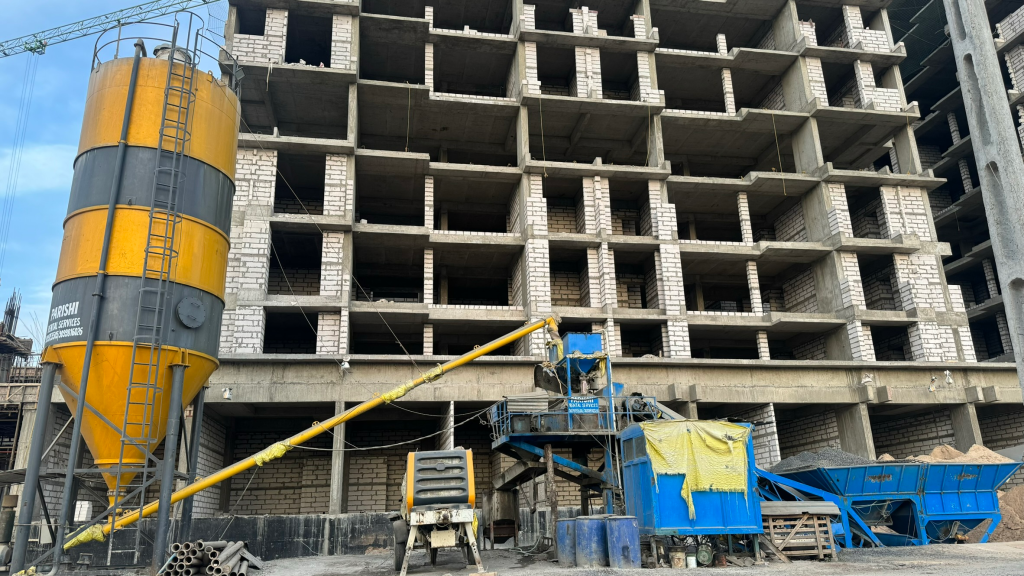
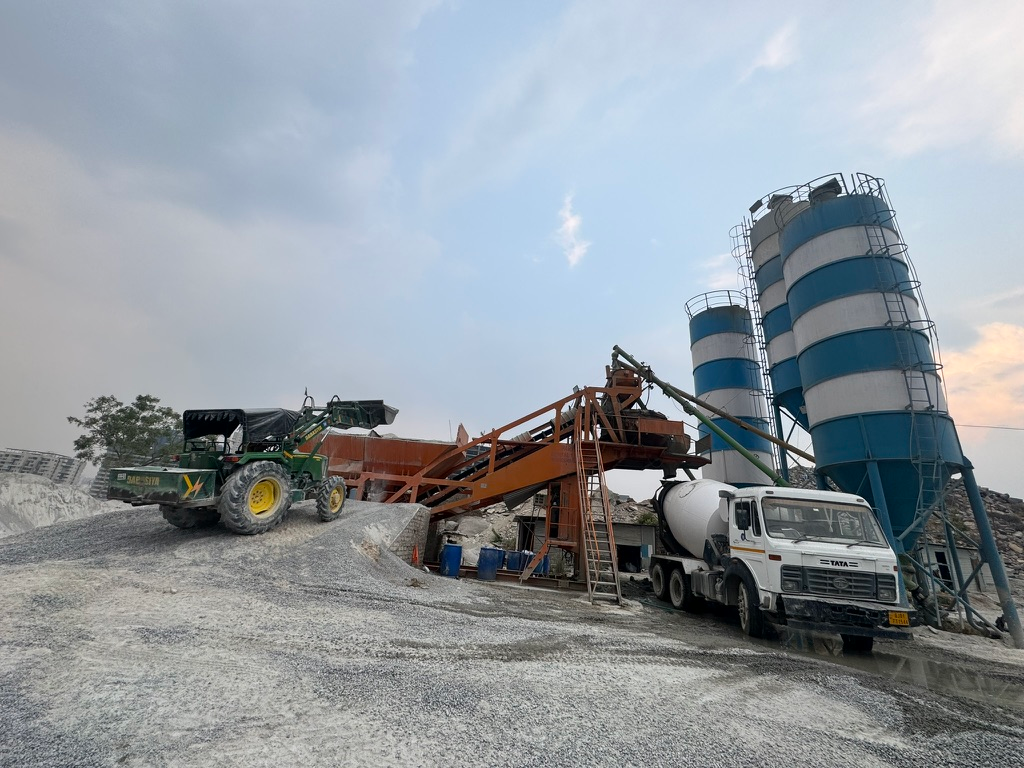
plant placement area marked
aggregate storage area prepared
cement and admixture storage location fixed
internal movement path for loader and TM planned
washout and maintenance zone identified
pump parking and pipeline route finalized
grid power availability checked
DG size planned as per plant load
backup arrangement kept ready
earthing completed
panel protection ensured
loader access confirmed
ramp planned if required
conveyor option evaluated
bag cement charging or silo charging decided
moisture correction plan prepared for sand
RCC slab or foundation made as per requirement
silo foundation prepared if standard silo is used
anchor points checked if needed
drainage considered around the plant
For plant sizes like 30, 45, and 60, material feeding becomes a major planning point.
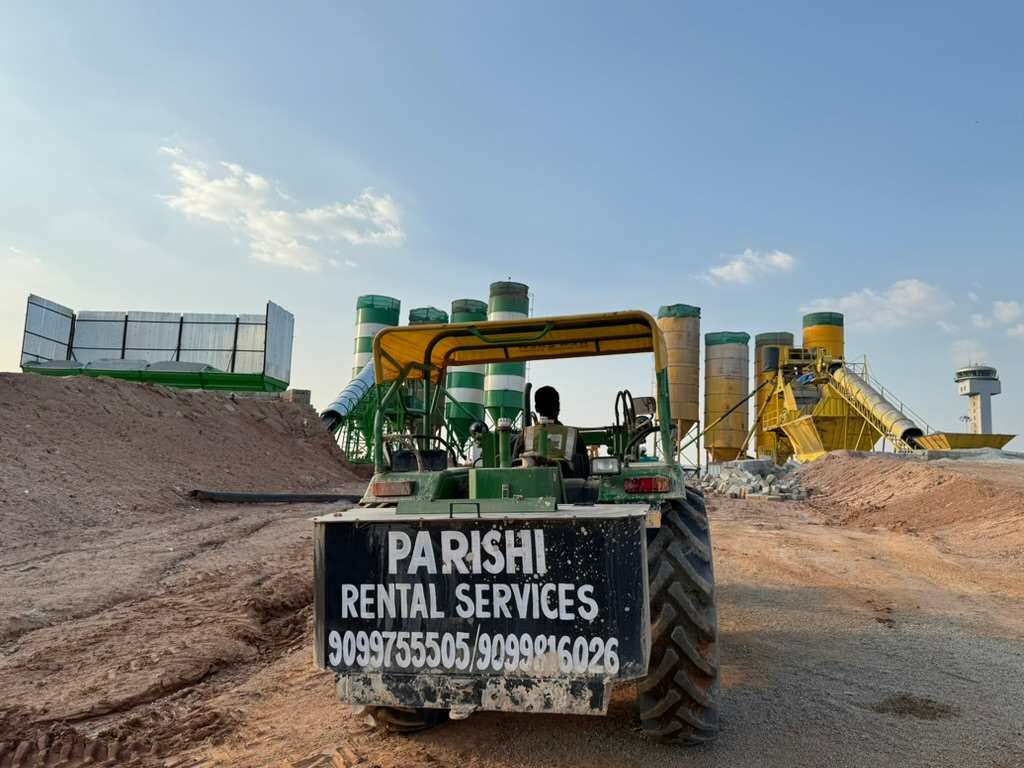
A ramp allows a loader to go up and feed the plant directly.
Advantages:
common and familiar system
easy to operate
workable in many sites
Limitations:
requires more civil work
takes more site space
may consume setup time
A conveyor can feed aggregates to the plant without needing a large ramp.
Advantages:
saves setup time
reduces civil work
can improve efficiency
useful where space is tight
Limitations:
needs proper alignment and planning
Required Rcc foundation
For many time-bound projects, the conveyor option can be more efficient because it reduces preparation time and improves movement planning.
When planning an on-site RMC plant for mass concrete, one important decision is cement feeding arrangement. In most practical site conditions, the choice usually comes down to silo system or hopper system. Both systems can work well, but the better option depends on your project duration, required output, labour availability, civil preparation time, and budget.
In simple words, a hopper is faster to start, while a silo is better for continuous, high-volume, less labour-dependent operation.
Parameter | Hopper | Conventional Silo | Foundation-Less Silo |
|---|---|---|---|
Base requirement | PCC | Piling or footing foundation | Small cubical raft |
Material feeding | Bag cutting by labour | Bulk cement by blower | Bulk cement by blower |
Transfer to plant | Screw conveyor | Screw conveyor | Screw conveyor |
Labour dependency | High | Low | Low |
Setup time | Fastest | Slowest | Faster than conventional silo |
Civil work requirement | Low | High | Moderate |
Output consistency | Depends on manpower | Stable | Stable |
Best for | short jobs, urgent startup | long-duration high-volume work | faster mobilization with bulk storage |
This section should be designed in Elementor as a toggle or accordion block.
Yes, if the completion timeline is flexible and the daily target is moderate. No, if the project is highly time-bound. The right way is to calculate the required daily output first.
Yes. In many short-distance site applications, they can pump directly up to around 100 to 150 meters, depending on concrete design, pump selection, pipe route, bend arrangement, and site conditions.
Yes, in some project situations this is practically done when the final placement method requires TM transport, such as in some diaphragm wall works.
Yes, it is very common in many projects. However, the mix must be pumpable and cohesive, and the line layout must be planned correctly.
Yes, but it is more sensitive. Theoretically it can be done. Practically, it may become challenging because of free fall, segregation, velocity control, discharge behavior, and stability of placement.
Not always. Direct pumping is excellent where the site layout supports it. But in spread-out or multi-location projects, transit mixers may still be necessary.
In many cases, yes. It can reduce:
outside vendor dependency
transit mixer requirement
diesel consumption
idle time
delay cost
coordination losses
Which RMC plant is suitable for a 5,000 CMT project?
A well-planned 18 or 20 plant may be enough if the completion period is comfortable. If the deadline is tighter, a 30 plant may be better.
Can direct pumping reduce project cost?
Yes, especially when the plant is close to the placement point and transit mixer movement can be minimized.
Is a ramp always required for site batching plants?
No. Smaller plants like 18 and 20 often allow direct loader feeding into the hopper. Bigger plants may need a ramp or conveyor.
What is the benefit of a foundation-less silo?
It saves civil preparation time and helps start operations faster in suitable site conditions.
Why are admixtures important in mass concreting?
They help control slump, workability, retention, and pumping performance.
Can an on-site plant improve quality control?
Yes. It gives better control over batching, timing, material handling, and mix adjustment.
Guide – click link
Call us to +542215676835 from 0:00hs a 24:00hs